

“I am Not Sure If It is True But…” – And You Still Sent It
Have you ever seen a message that begins with:
“URGENT. SHARE BEFORE IT IS DELETED.”
…and suddenly felt like the fate of humanity now rests on your thumbs?
Relax. You are not alone.
We have all almost become unofficial ambassadors of nonsense at some point.
But before we blame the internet entirely, let us be honest:
Misinformation did not start online.
It simply got Wi-Fi.
So let us take a proper walk through history – from village whispers to viral chaos on your phone.
Before Wi-Fi, There Were Whispers

Long before smartphones, before social media, before “breaking news alerts,” misinformation had a powerful delivery system.
People. Talking. Confidently.
It looked like this:
“Nimeskia…” (I have heard…..)
“There is a rumor going around…”
“My friend’s cousin works somewhere and said…”
And just like that, a story was born.
A rumor would start in one place, travel through markets, matatus, churches, and barbershops, and by the time it reached the next town, it had already changed personality.
A small incident became a national crisis.
A misunderstanding became a conspiracy.
A guess became “confirmed information.”
No screenshots. No links. No evidence.
Just confidence and vibes.
And the funniest part? People still believed it, because it came from someone they trusted.
Sound familiar?
Exactly.
The Era When Forwarding Was a Personality Trait
Then came email and SMS, and misinformation got its first upgrade.
Messages started arriving like they had been personally authorized by the universe:
“READ THIS BEFORE IT IS TOO LATE.”
“A miracle doctors hate.”
“Send this to 10 people or suffer bad luck.”
Ah yes. The emotional blackmail era.
Nobody knew who wrote the message. Nobody cared. The important thing was that it sounded serious. If it was written in ALL CAPS, bold text, and seven exclamation marks, then surely it was official.
This was the glorious age of “forward as received” culture.
You saw a claim, it looked dramatic, and you sent it to your contacts with the confidence of someone who had zero intention of verifying anything. Why fact-check when you can spread confusion in under ten seconds?
In those days, misinformation was clumsy. It had bad grammar, strange formatting, and the emotional stability of a soap opera.
But it worked.
Because people trust urgency. People trust fear. People trust messages that sound like the sender is about to cry.
Then Social Media Arrived and Gave Misinformation a Makeover
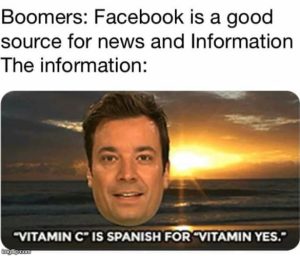
When social media entered the chat, misinformation realized it needed better branding.
It stopped looking like a shady email and started looking like a polished post. Suddenly, fake news had graphics. It had logos. It had filters. It had that clean, modern look that makes people say, “Hmm, this looks professional.”
And because it looked professional, we believed it faster.
This is where things got interesting. Misinformation no longer had to come from strangers in your inbox. It could come from:
a cousin on your timeline,
a friend in your WhatsApp group,
that one uncle who now comments like a political analyst,
or a forwarded screenshot with “just in case you missed this.”
Everyone became a publisher.
Everyone became a commentator.
Everyone became a source.
And honestly, that was the problem.
Because once misinformation entered social media, it learned how to travel with a smile. It was no longer shouting from rooftops. It was being shared quietly in groups, whispered through DMs, and packaged as:
“I am just sending this because I care.”
How thoughtful. How dangerous.
The Era of the Screenshot Expert
Then came the screenshot.
Oh, the screenshot. Humanity’s favorite weapon of confusion.
A screenshot is powerful because it feels like proof. But a screenshot can be cropped, edited, altered, or stripped of context faster than you can say, “Wait, where did this come from?”
This is the age when people started believing anything that looked like evidence.
A fake tweet? Screenshot.
A doctored headline? Screenshot.
A random claim with a logo slapped on top? Also screenshot.
Now misinformation did not even need a full explanation. It just needed a screenshot and an audience willing to react before thinking.
And react we did.
Because the internet has trained us to move at the speed of emotion, not the speed of truth.
Then Came the Voice Note Revolution
At some point, misinformation found its best disguise yet.
The voice note.
Nothing says “trust me” quite like a voice saying, “I am telling you this because I love you.”
Now the falsehood does not even need to be written down. It arrives sounding like your aunt, your neighbor, a concerned friend, or a person who speaks with just enough confidence to make you forget the need for evidence.
Voice notes are powerful because they feel personal. They sound like someone has insider information. They feel authentic even when they are built on pure nonsense.
And that is exactly why they work.
A text can be ignored.
A voice note feels like a secret.
And humans are absolutely terrible at resisting secrets.
The Pandemic Year When Rumors Got a Megaphone

Then came the year when everyone was indoors, online, and desperately looking for answers.
Misinformation flourished.
If it was whispered in a group, it was forwarded.
If it was half-understood, it was repeated.
If it sounded scientific and slightly dramatic, it was practically canon.
And because uncertainty makes people desperate, fake cures, fake warnings, fake statistics, and fake experts had a field day.
This was the moment misinformation proved it did not need to be true.
It only needed to be repeatable.
And repeat it we did.
In family groups, on social media, in office chats, and in the comments section where logic goes to rest.
Now We are in the Age of Deepfakes and Digital Theatre
Welcome to the modern age, where misinformation has upgraded from clumsy lies to polished performance.
Now we have:
manipulated videos,
AI-generated voices,
fake interviews,
fabricated screenshots,
and content made to look so real that even sensible people pause for a second.
That second matters.
Because misinformation has gotten smarter.
It now borrows real faces, real voices, and real events to build fake stories. It can make someone appear to say something they never said. It can make a false clip feel more believable than an actual news report. It can make your feed feel like a courtroom and your emotions the judge.
And because it is faster than fact-checking, it often wins the first round.
That is the danger.
Not that people are foolish.
Not that people are careless.
But that misinformation has become extremely convenient.
And convenience, as we know, is where common sense goes to die.
Why We Keep Falling for It
The truth is, misinformation works because it plays on very human instincts.
It uses:
fear,
curiosity,
outrage,
shock,
and the irresistible urge to say, “Let me send this before someone beats me to it.”
Sometimes we share because we are trying to help.
Sometimes because we want to look informed.
Sometimes because the message confirms what we already suspect.
And sometimes because, deep down, being first feels powerful.
Unfortunately, being first is not the same as being right.
Not even close.
What Media Literacy Should Look Like Now
Media literacy is no longer just about spotting a fake article with bad grammar. That would be too easy.
Now it means pausing before reacting.
It means asking:
Who made this?
Where did it come from?
What evidence is being shown?
What is missing?
Is this trying to inform me or provoke me?
If a message is making you furious, terrified, or eager to forward it immediately, that is your cue to slow down.
Not because you are being dramatic.
Because the message probably is.
You do not need to believe everything that lands on your screen just because it arrived with confidence.
Confidence is not the same as truth.
A fake headline can be bold.
A false video can be polished.
A rumor can sound urgent.
Still fake.
The New Rule of the Internet
In the early days, the rule was “don’t believe everything you read.”
Now it should be:
Do not believe everything you see, hear, screenshot, forward, or receive in a voice note from a person who starts with “I am not supposed to tell you this.”
That is usually your first warning.
Final Word
Misinformation has evolved.
It started as bad emails.
Then it became social media drama.
Then screenshots.
Then voice notes.
Now it is AI, deepfakes, and digital theatre in HD.
The good news is that media literacy can evolve too.
We can learn to slow down.
We can ask better questions.
We can stop rewarding nonsense with attention.
We can teach our children, colleagues, and communities how to think before they share.
Because in a world flooded with noise, the smartest thing you can do is pause.
And maybe, just maybe, let the forwarding finger rest.

Interact with us:- For more tips, tools, and resources, follow us on Tiktok, X, Facebook, Instagram and LinkedIn.
The internet is not short on noise.
Let us make sure you are not one more person helping it spread.
Written By:-
Jane Ndambuki
Education and Training Manager


