


Whispers from the Web: A Guide to Young Scholars and Their Curious Devices
Dearest readers,
It has come to the attention of this most observant author that the young scholars of our modern society have developed quite the attachment… not to books, not to outdoor adventures, but to a rather glowing rectangle that seems permanently attached to their hands.
Yes, dear reader. The screen.
One might assume these bright young minds are solving the mysteries of the universe. Yet, upon closer inspection, many appear to be watching videos of cats, playing games, participating in dance challenges, or conducting extremely serious research on whether pineapple belongs on pizza.
But alas, this is not a scandal sheet about questionable culinary choices. No. Today’s matter is far more pressing.
We must discuss the curious world of online learning – and the delicate art of staying safe within it.
A Most Curious Habit: The Endless Scroll

Let us begin with an observation.
A young learner sits down to “study online.” Admirable, indeed.
Five minutes later, they are still studying… but somehow the lesson has transformed into a compilation of football highlights, three gaming tutorials, and a video titled “This Goat Thinks It’s a Dog.”
Fascinating.
While digital learning has opened doors to knowledge once unimaginable, there exists a small complication. The internet, dear reader, is rather like an enormous marketplace.
There are teachers, scholars, and libraries.
But there are also tricksters, time-wasters, and individuals who should absolutely not be trusted with your attention – or worse, your personal information.
And yet many young learners wander through this marketplace as though it were their grandmother’s living room.
This, of course, is deeply concerning.
The Matter of Personal Secrets (Which Should Remain Secrets)
Now let us address a most scandalous trend.
Young learners are sharing their personal information online with the enthusiasm of someone distributing sweets at a birthday party.
Name? Shared.
Birthday? Shared.
School? Shared.
Location? Shared.
One might as well publish a notice in the town square.
“Greetings strangers, here is everything you need to know about me.”
Surely, dear reader, we can all agree that this is not the wisest approach.
Personal information online should be treated with the same seriousness as a family heirloom. Once given away, retrieving it becomes rather… complicated.
Therefore, let us establish a few rules of proper digital etiquette:
- Your full name, address, school, and phone number are not for public entertainment.
- Passwords should remain private – even from your most charming friends.
- If a website asks for information that feels unnecessary, pause and consult a trusted adult.
Remember: the internet never forgets. What is shared today may appear tomorrow, next year, or even in your future job interview.
And that, dear reader, would be most unfortunate.

A Word on the Matter of Screen Time
Another observation from this author’s careful study of society:
Young learners appear capable of staring at screens for remarkably long periods.
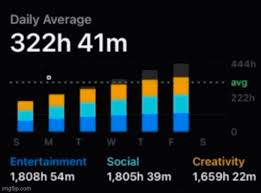
Hours pass.
The sun sets.
Parents begin calling names from other rooms.
And yet the glowing rectangle remains the centre of attention.
While the pursuit of knowledge is commendable, excessive screen time has its consequences.
Tired eyes.
Headaches.
Poor sleep.
And the dreadful phenomenon known as “brain fog” – where one reads the same sentence five times and still cannot remember it.
Therefore, allow this author to recommend a simple practice.
Every twenty minutes, look away from the screen for twenty seconds at something far away.
It is not glamorous advice, but your eyes will thank you.
And perhaps your spine as well.
The Internet’s Less Polite Guests
Now we arrive at the more delicate matter.
Not everyone online is who they claim to be.
Some individuals present themselves as friendly classmates, helpful tutors, or amusing strangers.
Yet their intentions are far less noble.
Young learners should remember:
- A stranger online is still a stranger.
- If someone asks for photos, personal details, or private conversations – decline immediately.
- If a message feels uncomfortable or strange, block the sender and inform a trusted adult.
There is no bravery in tolerating uncomfortable behaviour online.
True wisdom lies in knowing when to walk away.
Learning in the Digital Age: A Privilege, Not a Playground
Despite these warnings, dear reader, let it not be said that the digital world is without its wonders.
Online learning platforms allow students to explore science, mathematics, languages, art, and technology with extraordinary ease.
A curious mind can discover coding, robotics, history, or astronomy with a few simple clicks.
The opportunity is extraordinary.
But like any great privilege, it requires responsibility.
Young learners must remember:
The internet is not merely a playground.
It is a tool for knowledge.
Use it wisely.
A Final Note to Young Scholars (and Their Watchful Parents)

To the young readers: your curiosity is your greatest strength.
Protect it.
Guard your privacy.
Balance your screen time.
And remember that not every notification deserves your attention.
To the parents and educators observing from the sidelines: guidance is still required in this digital age. Conversations about online safety are no longer optional; they are essential.
Because the future of learning is undoubtedly digital.
But safety, dear reader, must always remain fashionable.
And now, having shared these most important observations, this author shall take her leave.
Until the next digital scandal reveals itself…
Yours truly,
Jane Ndambuki
A Concerned Observer of the Internet
(who, unlike some of you, remembers to log out of shared devices)


