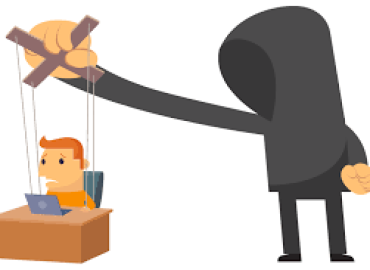

Dear Internet, We Need to Talk About How You Are Making Us Feel
Dear Internet,
We need to talk.
Not the usual “Have you tried turning your Wi-Fi off and on again?” kind of talk.
I mean a real conversation.
Because somewhere between “just one more scroll,” “let me check one thing,” and “I am only watching for five minutes”, some of us have quietly turned our phones into alarm clocks, entertainment centres, therapists, newsrooms, shopping malls, diaries, relationship counsellors and occasional sources of unnecessary emotional damage.
And then we wonder why our brains are tired.
You wake up and reach for your phone before your feet touch the floor.
You check the messages.
Then the notifications.
Then the news.
Then social media.
Then someone you have not spoken to since Form Four has posted their engagement photos, new car, promotion, holiday and somehow a perfectly decorated apartment.
It is 7:14 a.m.
You have not brushed your teeth.
But you are already questioning your life choices.
Dear reader, this is not a productive way to start the day.
And before the internet defenders arrive with, “But social media is not that serious…”
You are right.
Until you are on your fifth hour of scrolling at midnight wondering why you feel anxious, inadequate, angry, distracted and somehow exhausted despite doing absolutely nothing.
Well.
Nothing except consuming approximately 1847 opinions from strangers.
Dear Person Who Says,

We need to establish something.
Being constantly connected does not automatically mean being mentally well.
The digital world can bring wonderful things into our lives.
It helps us stay connected to family and friends. We discover communities we may never have found offline. We learn new skills, find opportunities, share our creativity and sometimes laugh so hard at one ridiculous video that the rest of the day becomes slightly more bearable.
That matters.
But the same digital spaces can also introduce comparison, pressure, cyberbullying, unrealistic expectations, information overload and the feeling that you are permanently behind.
And the tricky part?
The internet rarely clocks out.
You can.
It cannot.
There is always another notification.
Another message.
Another trending story.
Another argument.
Another person telling you how to live your life despite not being able to locate their own charger.
Dear Algorithm, We Know You Are Doing Your Job
Let us talk about the algorithm.
You know the one.
You watch one video about fitness.
Suddenly you are being shown workouts, supplements, meal plans, gym transformations and someone shouting at you to wake up at 5 a.m.
You watch one sad video.
Now the internet apparently believes you are emotionally available for an entire documentary series on heartbreak.
Algorithms are designed to keep us engaged by learning from patterns in our behaviour and recommending content.
That can make our online experiences feel personalised.
But it also means that what we repeatedly consume can shape what keeps appearing in front of us.
So when your entire feed becomes panic, outrage, comparison and bad news, your digital environment can start feeling like the world itself is falling apart.
Sometimes it is not.
Sometimes your feed is just having a terrible day.
And that distinction matters.
Dear Scrolling Thumb, Please Sit Down

There is a strange thing about scrolling.
It does not always feel like anything.
You are not necessarily enjoying yourself.
You are not necessarily learning.
You are not even necessarily looking for something.
You are just…
scrolling.
One video.
Another.
Another.
Another.
Then suddenly it is 1:37 a.m. and tomorrow’s responsibilities are standing outside your door like, “So are we ignoring each other now?”
Digital wellbeing is partly about becoming aware of how technology fits into your life.
Ask yourself:
How do I feel before I go online?
How do I feel while I am online?
How do I feel afterwards?
Because screen time is only part of the conversation.
Ten minutes online could leave you feeling inspired.
Ten minutes could also leave you comparing your body, salary, relationship, career and entire existence to someone whose post has had seventeen filters applied.
Same phone.
A very different experience.
Dear Parents, “Just Give Me the Phone” Is Not a Parenting Strategy

To the parents reading this:
We need to talk about children too.
Today’s young people are growing up in a digital environment that is part of their social lives, education and entertainment.
So conversations about online wellbeing cannot stop at:
“Put that phone down!”
Although, to be fair, sometimes putting the phone down is exactly the correct instruction.
But children also need to understand why.
They need spaces where they can talk about what they see online without immediately expecting a lecture.
What happens when someone insults them?
What should they do when they encounter disturbing content?
What happens when an online friendship becomes uncomfortable?
How do they recognise pressure to share personal information or images?
How do they deal with comparison?
And perhaps the biggest question:
How do they know when being online is no longer making them feel good?
Online safety and mental wellbeing are connected.
A child who feels unsafe online may also feel anxious, withdrawn or overwhelmed.
That means creating safer digital environments is not only about passwords and privacy settings.
It is also about emotional safety.
Dear Young Person Who Thinks Everyone Else Has Life Figured Out

Please remember this.
Social media is a highlight reel, not a census.
You are seeing selected moments.
The graduation photo.
The relationship announcement.
The new job.
The holiday.
The glowing skin.
The “5 a.m. morning routine” posted at 11:48 a.m.
Nobody uploads:
“Today I stared at my ceiling for 45 minutes wondering what I am doing with my life.”
Yet that might be closer to reality for many people than the perfectly edited version we see online.
Comparison becomes particularly exhausting when we compare our behind-the-scenes with someone else’s best angles.
So take a breath.
You are not necessarily behind.
You may simply be measuring your life against someone’s carefully selected moments.
Dear Everyone Who Has Ever Said “It is Just the Internet”
The internet may be digital.
Our reactions are not.
Words still hurt.
Humiliation still hurts.
Bullying still hurts.
Exclusion still hurts.
Harassment still hurts.
And when something happens online, people sometimes behave as though consequences disappear because the interaction happened through a screen.
They do not.
That is why digital wellbeing also involves how we treat other people.
Before commenting, posting or forwarding something, ask:
Is it true?
Is it necessary?
Could it hurt someone?
Would I say this if the person were sitting next to me?
Because courage is not typing something cruel from behind a screen.
Anyone with Wi-Fi can do that.
Dear You, It Is Okay to Log Off

This may be the hardest one.
You are allowed to leave the group chat.
You are allowed to mute notifications.
You are allowed to unfollow accounts that constantly make you feel inadequate.
You are allowed to take a break.
You are allowed to put your phone away without announcing:
“Taking a social media detox. See you all in 72 hours.”
You can simply…
log off.
Your phone does not need access to every waking moment.
Your brain deserves quiet too.
Try having meals without the phone.
Create a screen-free period before bed.
Turn off unnecessary notifications.
Take a walk without documenting it.
Have a conversation without checking who viewed your story.
And occasionally experience something beautiful without immediately asking:
“Wait, should I post this?”
Not everything needs content.
Some things can simply be yours.
Dear Internet, We Are Setting Some Boundaries

We are not saying:
Delete everything.
Become a farmer.
Move to the hills.
Communicate exclusively through handwritten letters.
Although, honestly, some days the letters sound peaceful.
We are saying:
Use technology intentionally.
Notice how it affects your mood.
Protect your time.
Curate what you consume.
Create boundaries.
Talk to someone when things feel overwhelming.
And remember that taking care of your mental wellbeing is not a weakness.
It is maintenance.
You maintain your phone.
You update your apps.
You charge your battery.
You clear storage when things get crowded.
Perhaps your mind deserves some maintenance too.
One Last Thing, Dear Reader

The goal of digital wellbeing is not to create a life without screens.
That would be rather inconvenient in 2026.
The goal is to build a digital life that supports your wellbeing instead of quietly draining it.
So tonight, before you fall into the familiar rabbit hole of:
“Let me just check one thing…”
Pause.
Ask yourself:
Do I actually want to be here?
And when your phone says, “Are you still watching?”
You are legally, emotionally and spiritually allowed to say:
“Actually, no.”
Then put it down.
Go outside.
Talk to someone.
Rest.
Laugh.
Eat.
Sleep.
Be a human being somewhere the algorithm cannot immediately recommend you another video.
Because your mental health deserves more than whatever happens to appear on your feed.
And sometimes the healthiest thing you can do online…
is to remember that you don’t have to be online all the time.
At Eveminet, we believe digital safety is also about how technology affects the people using it.
Through our digital wellbeing, online safety and awareness programmes, we help young people, parents, educators and organisations navigate the digital world with greater confidence, awareness and responsibility.
Explore more resources and learning opportunities at www.eveminet.co.ke.
Because a safer digital life is not just about protecting your devices.
It is also about protecting the person behind the screen.

By:-
Jane Ndambuki
Education and Training Manager