
AI 101: Demystifying Artificial Intelligence
A Day in the Life of Someone Who Thinks They Do not Use AI
6:45 AM.
Your alarm rings.
You hit snooze.
Again.
Your phone, apparently committed to your personal development, reminds you that you are already late.
You check the weather. You open your music app. You scroll through your feed. Your keyboard corrects a spelling mistake before you even notice it.
Then you confidently tell your friend:
“I do not really use AI.”
😂
Okay.
And your grandmother is secretly running a data centre.
The truth is, AI has probably been part of your day before you have even brushed your teeth.
Artificial Intelligence is no longer some futuristic robot waiting to take over the world. It is already woven into search, recommendations, digital assistants, translation, education, entertainment, customer service and countless other everyday experiences.
So, grab your imaginary coffee and come along.
This is a day in the life of you – with AI quietly tagging along.
8:00 AM – The Algorithm Knows What You Like

You open your favourite social platform.
Within seconds, your feed is full of videos, posts and recommendations that seem strangely tailored to your interests.
You think:
“Wow, this app knows me.”
Technically, it does not know you the way your best friend does.
It recognises patterns.
AI-powered systems can analyse signals such as what you watch, click, search for, skip or interact with and use those patterns to make predictions about what you might want to see next.
Which explains why you watched one video about gym workouts and suddenly your entire internet personality became a “future fitness influencer.”
You were not ready.
The algorithm was.
10:00 AM – “Just Help Me Find This”

You need information.
So you search for it online.
Search engines use sophisticated algorithms and AI techniques to understand what you are asking and determine which results might be most useful.
Convenient?
Absolutely.
But here is your first AI literacy lesson:
An AI-powered system can give you an answer without guaranteeing that the answer is correct.
This matters even more when you are using generative AI.
Because sometimes AI can produce information that sounds incredibly convincing while being completely wrong.
Confident nonsense is still nonsense.
It just has better grammar.
12:30 PM – Lunch, But Make It AI
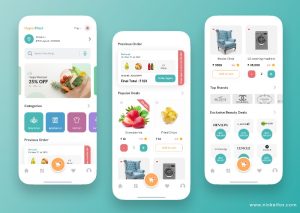
You open your food or shopping app.
Recommendations appear.
“Because you liked this…”
“People similar to you bought…”
“Recommended for you…”
You have now entered the wonderful world of predictive AI.
AI systems can use patterns in data to make predictions or recommendations.
This can be useful.
It can help businesses understand customers, improve services and personalise experiences.
But it also raises important questions.
What data is being collected?
How is it being used?
Who gets access to it?
And perhaps the question we should ask more often:
Did I actually agree to this, or did I just press “Accept” because the button was annoyingly large?
AI literacy is not just about knowing what AI can do.
It is also about understanding what happens to your data along the way.
2:00 PM – “Let Me Ask AI”

Now comes the part everyone talks about.
You open a generative AI tool.
You type:
“Write this email for me.”
Seconds later, you receive a beautifully structured response.
You feel powerful.
You wonder why you spent sixteen years in school.
Then you ask it another question.
And another.
Suddenly, your new colleague does not have a desk.
It has servers.
Generative AI can create or transform content such as text, images, audio and other media based on patterns learned from large datasets.
It can be incredibly useful for brainstorming, learning, drafting, summarising and exploring ideas.
But there is a catch.
AI is a tool, not an oracle.
You still need to think.
You still need to verify.
You still need to make decisions.
AI literacy means knowing when to use AI, how to use it effectively and, perhaps most importantly, when not to use it.
4:00 PM – AI Makes a Mistake
You ask AI for some information.
It gives you an answer.
It sounds intelligent.
It even uses impressive vocabulary.
Then you check.
And discover that the answer is wrong.
Welcome to one of the most important AI literacy concepts:
AI can hallucinate.
No, it has not seen a ghost.
In AI, a hallucination happens when a system generates information that may sound plausible but is inaccurate, fabricated or unsupported.
This is why the golden rule is:
Never outsource your critical thinking to a chatbot.
Especially when the topic involves money, health, education, legal matters, personal information or important decisions.
Use the tool.
But most importantly, verify the answer.
6:30 PM – AI Is Not Automatically Neutral
On your way home, you start thinking about something else.
“But if AI learns from data, what happens when the data contains human bias?”
Excellent question.
AI systems can reflect or amplify biases present in the data, design choices or processes used to build and deploy them.
That means AI is not magically neutral simply because a computer is involved.
Humans build these systems.
Humans select data.
Humans make decisions about how systems are used.
So AI literacy also means learning about bias, fairness, inclusion and accountability.
Because replacing a human decision with a machine does not automatically make the decision fair.
Sometimes it just makes the unfairness happen faster.
8:00 PM – The Deepfake Appears

You are scrolling before bed.
You see a video of a famous person saying something outrageous.
The comments are already fighting.
One person says:
“This is crazy!”
Another says:
“It is definitely real.”
Someone else has already forwarded it to three family groups.
But wait.
Is it real?
AI can now be used to create highly convincing synthetic media, including manipulated images, audio and video.
This creates a new digital reality where seeing is no longer automatically believing.
AI literacy therefore requires media literacy too.
Before sharing something shocking, ask:
Who created this?
Where did it come from?
Can I verify it somewhere else?
Is there evidence?
Because “I saw it online” is not a source.
It is a location.
10:30 PM – So, What Exactly Is AI Literacy?
By now, you have used AI without necessarily opening an AI chatbot.
You interacted with recommendations.
You used search.
You encountered predictions.
You relied on automated systems.
You probably consumed AI-generated or AI-curated content.
And maybe you even asked a chatbot to help with something.
So here is the bigger lesson:
AI literacy is not about becoming a computer scientist.
It is about becoming a smarter user of technology.
It means understanding the basics of how AI works, recognising its strengths and limitations, questioning its outputs, protecting your data and using AI responsibly.
It also means understanding the human side of AI:
bias, privacy, ethics, misinformation, creativity, responsibility and decision-making.
Before You Say “AI Is Not My Thing…”

Look around.
AI is already influencing the way we learn, work, communicate, shop, create and consume information.
The question is no longer:
“Will I use AI?”
For most of us, the answer is probably yes.
The better question is:
“Will I understand enough about AI to use it wisely?”
Because the future does not necessarily belong to the person who uses the most AI.
It belongs to people who know how to use it responsibly, question it critically and keep humans in the driver’s seat.
And please…
Before you ask AI to write your entire life story, at least read what it gives you.
Your name is not “Dear User.”
Ready to Build Your AI Literacy?
At Eveminet, we believe AI education should go beyond buzzwords and button-clicking.
AI literacy should help young people, parents, educators, professionals and organisations understand AI, navigate its risks and use emerging technology responsibly.
Explore our digital safety and AI literacy resources, training programmes and learning opportunities at www.eveminet.co.ke
Because understanding AI should not be a luxury. It should be a digital survival skill.
By:-
Jane Ndambuki
Education and Training Manager